

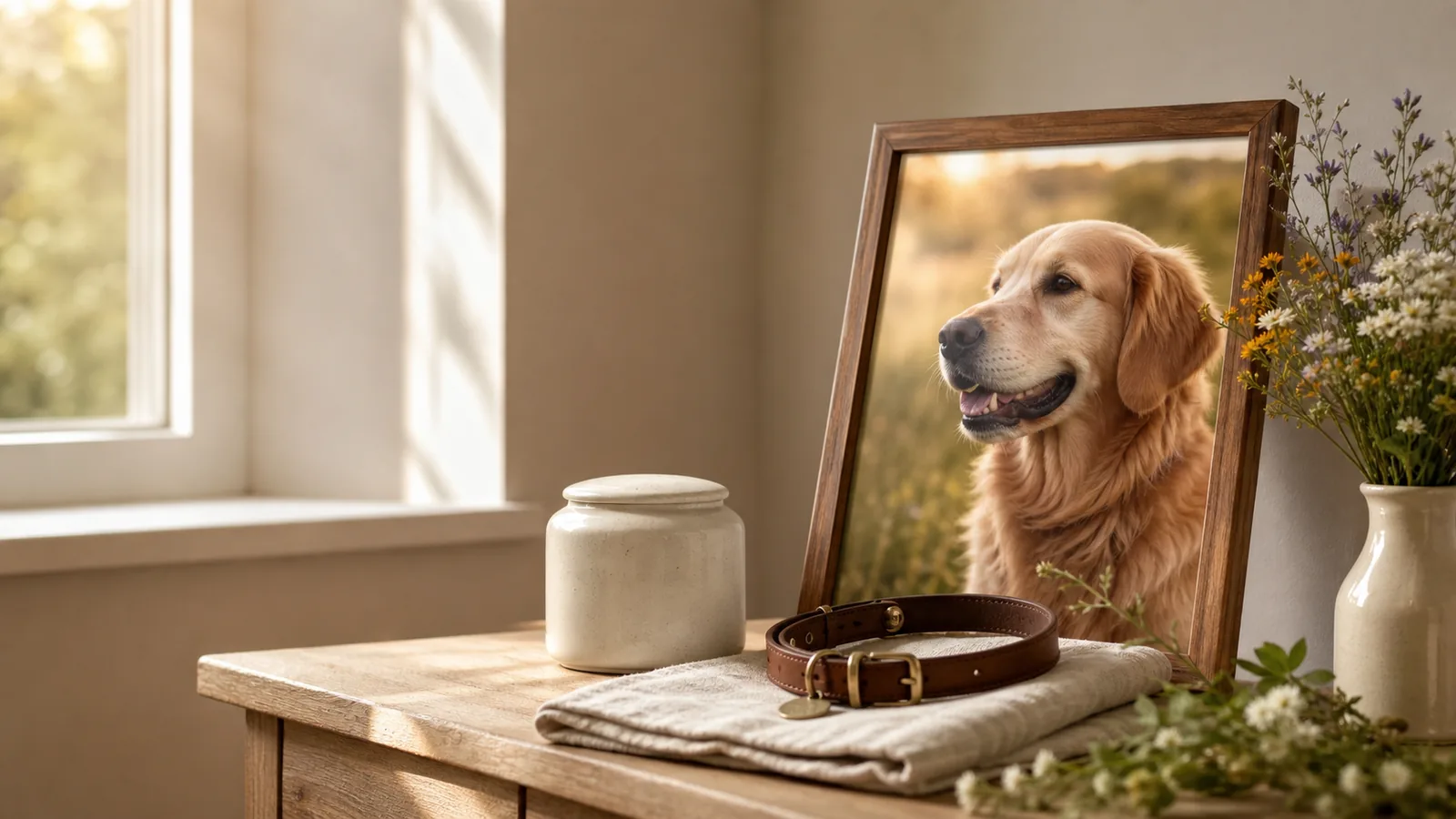
An urn that does not fit is a preventable problem. Dog Cremation Services recommends sizing from remains volume and display plans, then choosing materials.
Capacity first
For dogs: roughly 1 cubic inch of ash per pound of body weight (less linear above ~100 lb). Dogs range from under 5 lb toy breeds to 150+ lb giants. Chamber time, ash volume, and urn capacity all scale with body weight — a Chihuahua and a Great Dane are not interchangeable aftercare jobs.
Materials and use-cases
- Wood / ceramic — warm indoor display; ceramic is more fragile in moves.
- Metal — durable for travel or outdoor-covered display.
- Biodegradable — only if burial or water release is the plan.
Keepsake splits
If multiple people want ashes, plan a primary urn plus smaller keepsakes before the first vessel is filled and sealed.
Species-true design
Popular choices include wood or ceramic mantel urns, clay/ink paw prints, collar-and-photo shadow boxes, and ash-holding jewelry for daily closeness.
Common questions
Should I buy the urn before cremation?
You can, if you are confident on capacity. Otherwise use the temporary container and choose with a clear head.
What if ashes exceed the urn?
Keep overflow in a secondary keepsake rather than forcing a seal. Confirm capacity with the provider’s actual yield when possible.
Next step
Measure the shelf or memorial space, estimate capacity from weight, and only then shop aesthetics. Dog Cremation Services can help dog families think through that order so grief is not compounded by an undersized urn.
Urn sizing for dogs without panic math
An undersized urn is a preventable second emergency. Size from expected remains volume and display plan first; shop aesthetics second.
Dogs are the most common companion species in U.S. aftercare, which means more provider options — and more uneven quality. Breed size still dominates logistics: a 6 lb toy breed and a 120 lb mastiff do not share chamber time, ash volume, or urn shopping reality.
Capacity rules that actually help
Companion-dog rules of thumb (~1 cubic inch per pound) are a starting buffer for many mammals — not a universal law. Giant dogs and horses break casual charts; birds and small companions need miniature chambers. Confirm expected yield with the provider when possible.
Materials matched to real homes
- Wood / ceramic — warm indoor display; ceramic is more fragile in moves and kid zones
- Metal — durable for travel or covered outdoor spots
- Biodegradable — only if burial or water release is the plan
- Oversized “statement” vessels — often wrong for tiny ash volumes
High-completion dog memorials: mantel urn sized to weight, clay or ink paw print taken before cremation, collar-and-tag shadow box, and optional ash jewelry for one person who wants daily closeness.
Shares and seals
If multiple households want ashes, plan a primary vessel plus keepsakes before the first seal. Do not force overflow into a vessel that cannot close safely.
Measure the shelf. Write the capacity number. Then browse. That order protects dog families from grief shopping mistakes.
Species-true detail
Above roughly 80–100 lb, ash yield is less linear. Confirm with the provider’s expected return notes. Multi-dog homes sometimes need a second small share vessel for a partner household — plan before the first seal.
Dogs are not interchangeable with other companion or product paths. The phone calls that matter here sound like: acceptance for this dog, ash or product intent, access notes, and which memorial format you will actually finish.
Dogs are the most common companion species in U.S. aftercare, which means more provider options — and more uneven quality. Breed size still dominates logistics: a 6 lb toy breed and a 120 lb mastiff do not share chamber time, ash volume, or urn shopping reality.
Deep-chested breeds face bloat risk; brachycephalic breeds often have complex respiratory end-of-life pictures; giant breeds may have shorter lifespans. Anticipatory planning is realistic for cancer and renal decline; it is not realistic for sudden gastric dilatation-volvulus.
Decision filter for dogs: (1) Do you need ashes back? If yes → private or verified partitioned only. (2) Is witnessed presence important for closure? Ask before booking. (3) Will multiple households want a share? Plan primary urn + keepsakes before the first seal. (4) Is the dog a giant breed or remote rural case? Confirm chamber capacity and transport radius in writing.
Private dog cremation commonly lands around $150–$400 before urn upgrades, with giant breeds and witnessed services at the high end. Communal is often 40–60% less when ashes are not returned. Transport, after-hours pickup, and clinic handling fees frequently appear on separate lines.
Many dog deaths happen at the clinic after euthanasia; others happen at home overnight. Pre-save a provider that does home or clinic pickup. Note gate codes, apartment elevators, and whether a large breed needs two-person lift assistance.
Dog grief often attaches to routines: the leash hook, the evening walk gap, the empty greeting at the door. Species-specific owner groups help when generic “pet loss” advice feels too vague.
High-completion dog memorials: mantel urn sized to weight, clay or ink paw print taken before cremation, collar-and-tag shadow box, and optional ash jewelry for one person who wants daily closeness.
If a provider or product page cannot answer dog-specific questions without generic answers, look further. Dogs deserve specific guidance — not recycled content from generic pet resources.
Quick Poll
How knowledgeable do you feel about pet cremation options?
Click an option to vote and see results
Closing discipline
Finish this article with one written constraint for dogs, one phone number or product requirement, and one memorial action you can complete within seven days. That triad beats open-ended browsing during shock.
Also ask: Can my dog be cremated with a toy or blanket? Often a small combustible item is allowed. Ask about size limits and synthetic materials that may be restricted for chamber safety.
Dog field notes from Dog Cremation Services
Size and remains reality. Dogs range from under 5 lb toy breeds to 150+ lb giants. Chamber time, ash volume, and urn capacity all scale with body weight — a Chihuahua and a Great Dane are not interchangeable aftercare jobs.
Money ballpark. Private context: typically $150–$400 for private cremation, with larger breeds at the upper end. Communal context: often 40–60% less than private when ashes are not returned. Process timing: about 30–60 minutes for small breeds, up to 2–3 hours for giant breeds.
Ash / capacity guideline. roughly 1 cubic inch of ash per pound of body weight (less linear above ~100 lb)
Logistics that change the day. Breed-specific crises (bloat in deep-chested dogs, sudden cardiac events) mean many families need aftercare with little warning. Save a provider contact before you need it.
Memorial pattern that fits your dog. Popular choices include wood or ceramic mantel urns, clay/ink paw prints, collar-and-photo shadow boxes, and ash-holding jewelry for daily closeness.
Memorial directions that fit dog lives
High-completion dog memorials: mantel urn sized to weight, clay or ink paw print taken before cremation, collar-and-tag shadow box, and optional ash jewelry for one person who wants daily closeness.
For multi-dog homes, surviving dogs may search or cling. Keep walks and feeding predictable while humans grieve.
What is different about dog situations
Dogs are the most common companion species in U.S. aftercare, which means more provider options — and more uneven quality. Breed size still dominates logistics: a 6 lb toy breed and a 120 lb mastiff do not share chamber time, ash volume, or urn shopping reality.
Deep-chested breeds face bloat risk; brachycephalic breeds often have complex respiratory end-of-life pictures; giant breeds may have shorter lifespans. Anticipatory planning is realistic for cancer and renal decline; it is not realistic for sudden gastric dilatation-volvulus.
Working and service dogs leave a dual loss: partner and companion. Handler rituals, organization remembrances, and certificate wording sometimes matter as much as the urn.
Multi-dog households often face surviving dogs searching empty rooms, skipping meals, or clinging. Plan aftercare logistics and the surviving pack’s routine in the same week — not as afterthoughts.
Pricing patterns families compare on Dog Cremation Services
Private dog cremation commonly lands around $150–$400 before urn upgrades, with giant breeds and witnessed services at the high end. Communal is often 40–60% less when ashes are not returned. Transport, after-hours pickup, and clinic handling fees frequently appear on separate lines.
Compare quotes as line items: cremation type, transport miles, temporary container, prints, urn, taxes. A low headline that hides transport is not a bargain.
Dog Cremation Services keeps this journal focused on dog aftercare. Every article is written with dog-specific knowledge — because your questions deserve answers built around your companion.
A worked dog example
Imagine you are deciding this topic for your dog tonight. Write three lines on paper: (1) ash return yes/no or product job, (2) one access or species constraint, (3) one memorial action you can finish within a week. Then make only the calls or purchases that serve those three lines.
If family members disagree, separate “must have ashes / must have a ceremony / must have a wearable” from aesthetic preferences. Dog Cremation Services exists so dog households can name those constraints in species-true language.
Dog checklist for this topic - Confirm private vs communal vs partitioned options for dogs of your dog’s size - Ask whether witnessed cremation is available if that matters for closure - Measure likely urn capacity using weight before shopping memorial products - Re-read the dog decision filter above and circle your non-negotiable - Write down who is authorized to approve release, pickup, or product receiving - Capture one timeline commitment (ash return, engraving, ceremony, or planting season) - Confirm one tangible keepsake request before transport if that matters to your household
Dog-specific mistakes to refuse - Treating dog logistics like a generic “pet” brochure problem - Skipping acceptance, capacity, climate, or legal checks that matter for dog paths - Letting convenience override tracking, policy, or species-handling questions - Making permanent aesthetic commitments in the first numb hours when a temporary plan would do - Shopping memorial products before ash-return intent and capacity are clear - Ignoring this grief reality: Dog grief often attaches to routines: the leash hook, the evening walk gap, the empty greeting at the door. Species-specific owner groups help when generic “pet loss” advice feels too vague.
Life-stage and health context
Cancer, cardiac disease, renal failure, and age-related decline are common end-of-life paths. Anticipatory planning is often possible with cancer; acute events are not.
Common questions
How big an urn does my dog need?
Start near 1 cubic inch per pound of body weight, then add a buffer — especially above ~80–100 lb where yields are less linear. Confirm with the provider’s expected return notes when possible.
Can my dog be cremated with a toy or blanket?
Often a small combustible item is allowed. Ask about size limits and synthetic materials that may be restricted for chamber safety.
How is this different from generic pet advice?
Dog Cremation Services focuses on dog-specific logistics, costs, and memorial patterns — not a single essay with the species noun swapped.
What should I do in the next twenty minutes?
Write one constraint, one phone number or product requirement, and one keepsake/timing request. That beats open-ended browsing.
Who wrote this?
This article is published by Dog Cremation Services. It is educational guidance for dog families — not a personal medical, legal, or counseling byline.
Next step with Dog Cremation Services
Write your non-negotiable for this dog decision on one line. Make the next call or purchase only inside that constraint. Dog Cremation Services publishes focused guidance so fewer families invent a plan under shock.
Need a real person to talk this through with?
Use our guidance form if you want follow-up help, or browse location guides to compare options in your area. We do not operate a call center or claim a verified local provider network.
Filed Under
Ask Our AI Assistant
Have questions about pet aftercare? Our AI assistant — powered by the latest technology and trained on comprehensive pet aftercare knowledge — can help. Try asking: